The standard for Australian-grown specialty coffee.
Ninety-five hectares of Arabica across five paddocks in Mareeba — the country's largest specialty estate. Grown, processed and roasted on a single farm — proof that Australia grows world-class coffee.
Planted to Arabica
Largest in Australia
Paddocks
Across one property
Processing methods
Washed · Natural · Honey
Arabica varieties
Catuai · Marsellesa · NR25 · Paraiso · IPR 107
Latitude
Mareeba, FNQ
Altitude
Red volcanic + sandy loam

Coffee shaped by place.
Our farm sits at 600 metres above sea level in Mareeba, Far North Queensland — on red volcanic soil and sandy loam. Volcanic origin, altitude, latitude: the conditions to grow Arabica at world-class standards, here at home.
At 17° south, 145° east, we get a true dry season, a slow cherry ripening, and a clean separation between flowering and harvest. The cup that comes out of it is unmistakably ours — and unmistakably Australian.
Five paddocks, one farm.
Ninety hectares planted across five distinct blocks. Each paddock is its own microclimate — varied by aspect, elevation, planting date, and variety. We harvest and process each one separately. We never blend across paddocks at the green-bean stage.
The pillars we run on.
Six principles that take a coffee farm in Mareeba from possible to producing Australia's finest cup. Not aspirations. The way we operate.
Three ways to turn a cherry into a bean.
Most Australian growers run one process. We run three — in parallel, every harvest. Each method draws a different cup from the same fruit. We do all of it on-farm, in our own wet mill and drying yard.
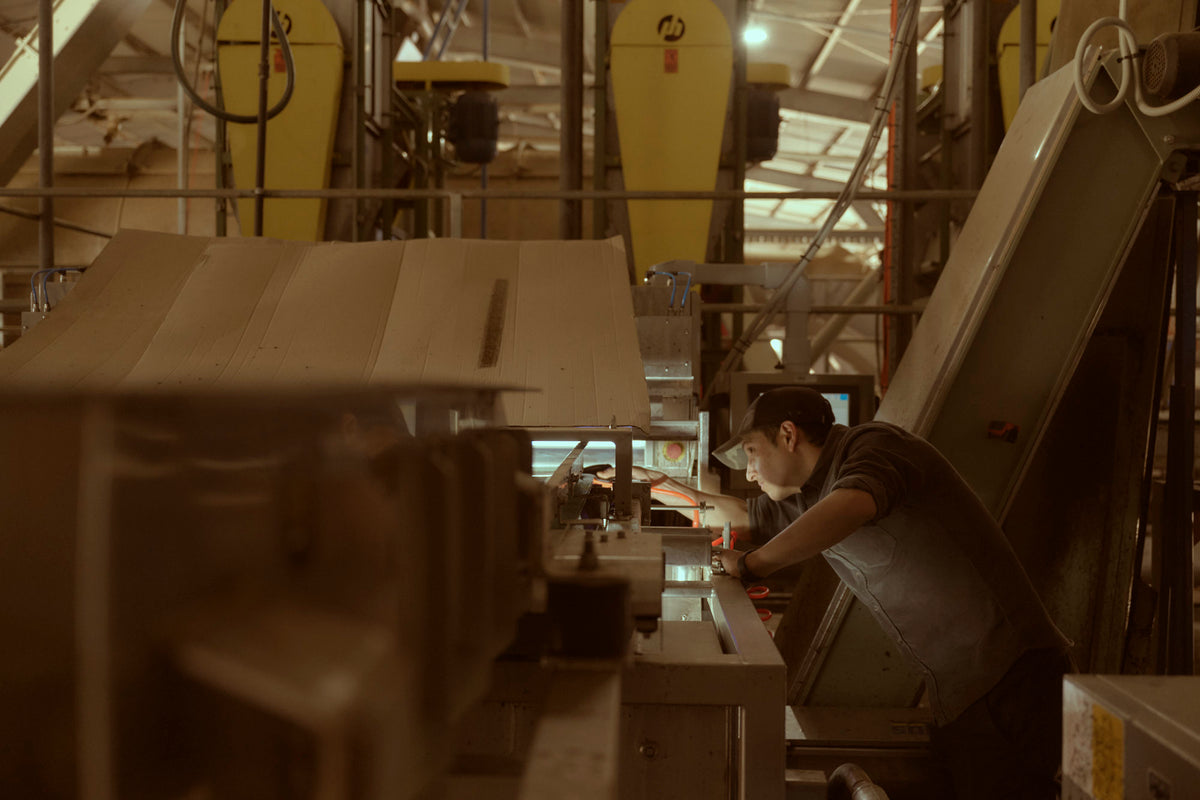
The clean cup. Cherry is depulped within hours of picking, fermented for around six hours — just enough to lift the sugars — then washed and mechanically dried. What remains is the coffee of the row: clarity, defined acidity, and brightness.
Fermentation: ~6 hrs
Drying: Mechanical
Drinks like: Apricot, citrus blossom, syrup
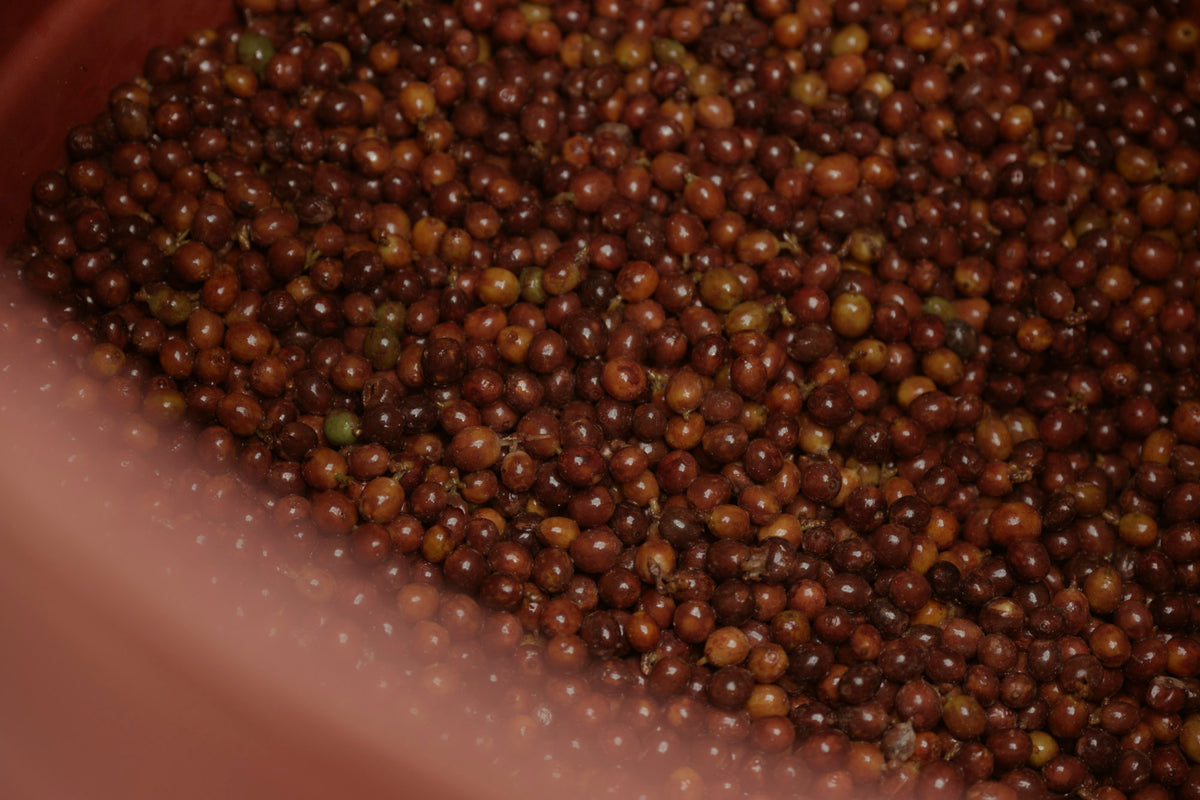
The whole cherry, fermented in controlled conditions — aerobic or anaerobic, depending on the cup we're chasing — for six to fourteen days, then dried on raised beds or mechanically, again chosen for the target profile. The fruit imparts body, sweetness, and the kind of berry character that puts Australian coffee on the world map.
Fermentation: 6 – 14 days, aerobic or anaerobic
Drying: Raised beds or mechanical
Drinks like: Strawberry, brown sugar, stone fruit
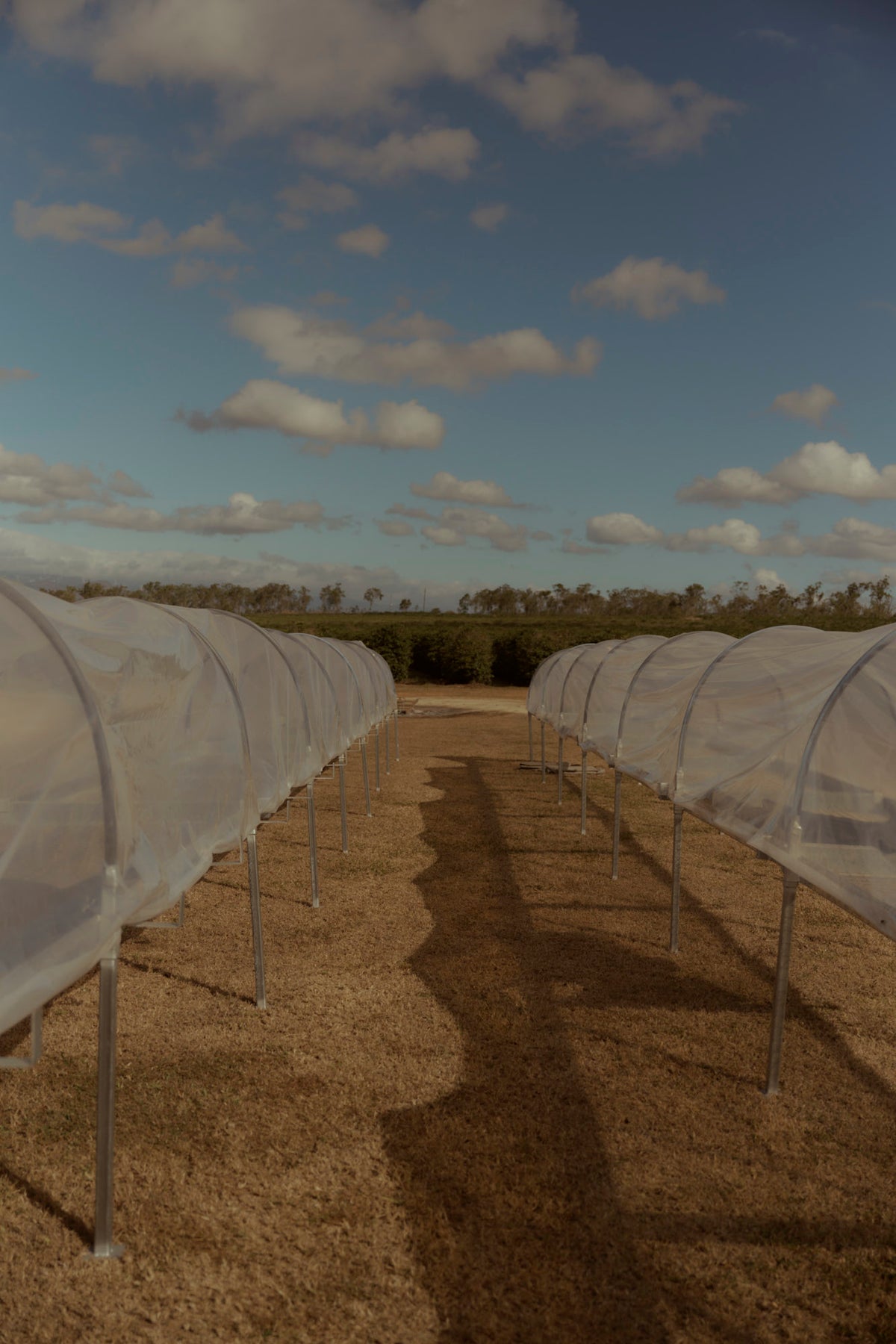
The middle ground. Twenty-four hours of fermentation in cherry, then depulped and fermented again for seven to fourteen days with a controlled fraction of mucilage retained, before raised-bed drying. The result reads like a washed coffee with a natural's body and roundness.
Fermentation: 24 hrs in cherry, then 7 – 14 days post-pulp
Drying: Raised beds
Drinks like: Honeycomb, ripe cherry, almond

Roasted on the farm that grew it.
Our roastery sits one hundred metres from the wet mill. The green bean travels further to get into a customer's hands than it does to get into our roaster. That proximity is not a marketing line — it is a quality control mechanism.
We cup every lot weekly and adjust roast profiles through the season. All coffee is roasted to order, in small batches, and dispatched within two business days of roasting.

The man on every bag.
Jack Murat — patriarch, grandfather, namesake — arrived in Australia in 1929 at sixteen, in search of opportunity. He started as a woodcutter, eventually acquired a parcel of land, and spent the years that followed coaxing tobacco from soil no one had asked it to grow in.
He never grew coffee. He didn't live to see the generations that followed plant the first row, or taste the cup. But every paddock is named after country he walked, every harvest is run on principles he taught, and every bag we ship carries his name.
Leading what Australian-grown coffee can be.
For more than a century, Australia mostly drank coffee grown elsewhere. We're part of a small group helping change that.
Jack Murat Coffee is grown, processed, and roasted in Mareeba, Queensland, on what is today Australia's largest coffee estate. Through careful farming, processing, and roasting, we're working to show what Australian-grown specialty coffee can look like — honest, traceable, and distinctly of this place.
Every coffee we release feeds back into the farm, the mill, and the people behind it. We're not chasing novelty. We're focused on building a long-term future for Australian coffee.